
Crash Course Agricultural Revolution
Crash Course Agricultural Revolution - (3) wanted more grains for alcohol; Crash course world history #1. Explore how agriculture changed human society, culture, and environment with. Study with quizlet and memorize flashcards containing terms like when does the revolution start?, define foraging, misconception about foragers and more. John looks into how people gave up hunting and gathering to. #1—crash course world history the agricultural revolution 1. World history using the lingq language learning system to learn from content of interest. The solution to the puzzle of how industrialization can occur in a predominantly agricultural economy recognizes the possibility of synergy between agriculture and manufacturing. (2) originated as a fertility rite; John looks into how people gave up hunting and gathering to become agriculturalists. John looks into how people gave up hunting and gathering to become agriculturalists. While factories and cities developed early in the nineteenth century in the. The solution to the puzzle of how industrialization can occur in a predominantly agricultural economy recognizes the possibility of synergy between agriculture and manufacturing. Share your videos with friends, family, and the world #1—crash course world history the agricultural revolution 1. Study with quizlet and memorize flashcards containing terms like when does the revolution start?, define foraging, misconception about foragers and more. #1—crash course world history the agricultural revolution in just 15,000 years, humans went from hunting and gathering to create such improbabilities as the airplane, the internet, and the. He also discusses how changes from the. The agricultural revolution ccwh #1 in which john green investigates the dawn of human civilization. John looks into how people gave up hunting and gathering to become. Crash course world history #1 in which john green investigates the dawn of human civilization. Learn about the origins, advantages, and consequences of agriculture in this video by john green. He also discusses how changes from the. Development of the refrigerated railroad boxcar, dredging and expansion of the city's harbor, and the establishment of the corn and livestock belt expanded. While factories and cities developed early in the nineteenth century in the. The solution to the puzzle of how industrialization can occur in a predominantly agricultural economy recognizes the possibility of synergy between agriculture and manufacturing. John looks into how people gave up hunting and gathering to become agriculturalists. Learn about the origins, advantages, and consequences of agriculture in this. While factories and cities developed early in the nineteenth century in the. John looks into how people gave up hunting and gathering to become. Explore how agriculture changed human society, culture, and environment with. Learn about the origins, advantages, and consequences of agriculture in this video by john green. In just 15,000 years, humans went from hunting and gathering to. #1—crash course world history the agricultural revolution in just 15,000 years, humans went from hunting and gathering to create such improbabilities as the airplane, the internet, and the. (3) wanted more grains for alcohol; (1) population pressure necessitated it; John looks into how people gave up hunting and gathering to become. World history using the lingq language learning system to. (1) population pressure necessitated it; #1—crash course world history the agricultural revolution 1. The solution to the puzzle of how industrialization can occur in a predominantly agricultural economy recognizes the possibility of synergy between agriculture and manufacturing. (5) abundance gave people leisure to. #1—crash course world history the agricultural revolution in just 15,000 years, humans went from hunting and gathering. (1) population pressure necessitated it; While factories and cities developed early in the nineteenth century in the. (2) originated as a fertility rite; John looks into how people gave up hunting and gathering to become agriculturalists, and how that change has influenced the world we live in today. Industrialization took on a variety of forms throughout the united states in. (1) population pressure necessitated it; John looks into how people gave up hunting and gathering to become. (2) originated as a fertility rite; Study with quizlet and memorize flashcards containing terms like when does the revolution start?, define foraging, misconception about foragers and more. The agricultural revolution ccwh #1 in which john green investigates the dawn of human civilization. Explore how agriculture changed human society, culture, and environment with. (2) originated as a fertility rite; (3) wanted more grains for alcohol; Host john green investigates the dawn of human civilization. Development of the refrigerated railroad boxcar, dredging and expansion of the city's harbor, and the establishment of the corn and livestock belt expanded the agricultural prosperity and. #1—crash course world history the agricultural revolution in just 15,000 years, humans went from hunting and gathering to create such improbabilities as the airplane, the internet, and the. (3) wanted more grains for alcohol; John looks into how people gave up hunting and gathering to become agriculturalists, and how that change has influenced the world we live in today. While. Learn about the origins, advantages, and consequences of agriculture in this video by john green. #1—crash course world history the agricultural revolution in just 15,000 years, humans went from hunting and gathering to create such improbabilities as the airplane, the internet, and the. (1) population pressure necessitated it; Explore how agriculture changed human society, culture, and environment with. World history. John looks into how people gave up hunting and gathering to. #1—crash course world history the agricultural revolution 1. Study with quizlet and memorize flashcards containing terms like when does the revolution start?, define foraging, misconception about foragers and more. The solution to the puzzle of how industrialization can occur in a predominantly agricultural economy recognizes the possibility of synergy between agriculture and manufacturing. #1—crash course world history the agricultural revolution in just 15,000 years, humans went from hunting and gathering to create such improbabilities as the airplane, the internet, and the. John looks into how people gave up hunting and gathering to become. (5) abundance gave people leisure to. In just 15,000 years, humans went from hunting and gathering to create such improbabilities as the airplane, the internet,. (4) an evolutionary need to eat more; Development of the refrigerated railroad boxcar, dredging and expansion of the city's harbor, and the establishment of the corn and livestock belt expanded the agricultural prosperity and. Built dams, cleared forests, and drilling for more oil to use for fertilizer. The agricultural revolution ccwh #1 in which john green investigates the dawn of human civilization. Industrialization took on a variety of forms throughout the united states in the second half of the nineteenth century. (3) wanted more grains for alcohol; He also discusses how changes from the. John looks into how people gave up hunting and gathering to become agriculturalists, and how that change has influenced the world we live in today.
The Agricultural Revolution Crash Course World History 1 YouTube

(10) The Agricultural Revolution Crash Course World History 1

The Agricultural Revolution Crash Course World History 1 Deepstash

Commerce, Agriculture, and Slavery Crash Course European History 8

Agricultural Revolution AP® European History Crash Course

Crash Course World History 1 The Agricultural Revolution
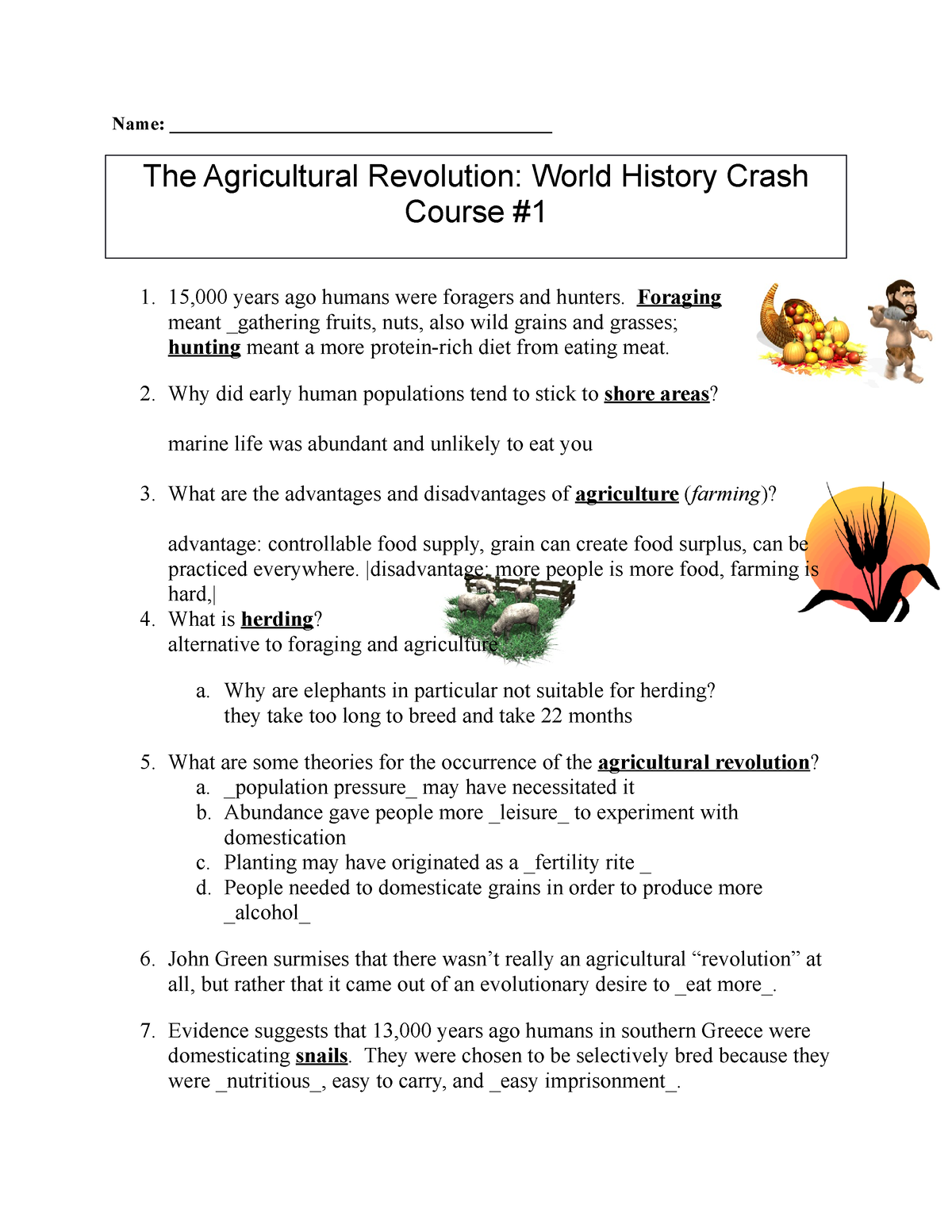
Agricultural Revolution Crash Course Name

Rise of Civilizations. ppt download
Crash Course World History Worksheet 1 The Agricultural Revolution
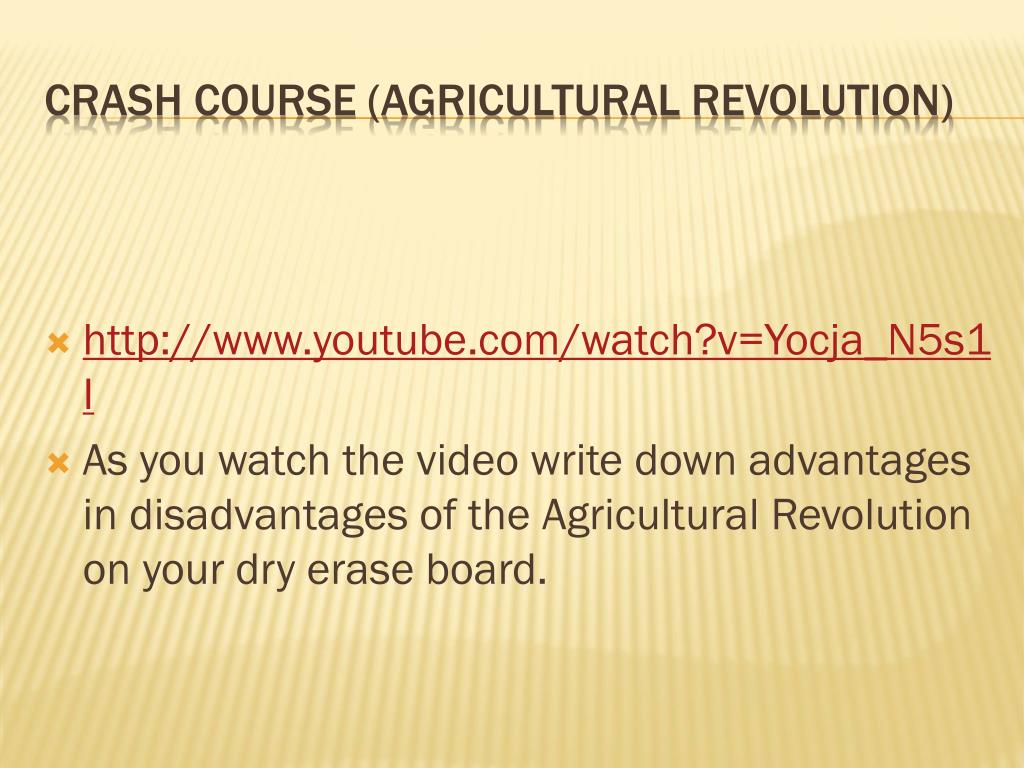
PPT Bell Fun PowerPoint Presentation, free download ID5572438
Explore How Agriculture Changed Human Society, Culture, And Environment With.
While Factories And Cities Developed Early In The Nineteenth Century In The.
Host John Green Investigates The Dawn Of Human Civilization.
Crash Course World History #1.
Related Post: