
Of Course You
Of Course You - Choosing “of course or ofcourse” is critical in maintaining professionalism. Of course you are having trouble finding your car. The phrase “of course” is a standard english usage that signifies agreement or the obviousness of a fact. “of course” is the proper phrase to use when you want to express certainty, agreement, or something that is obvious, while “ofcourse” is simply an incorrect spelling that. In business writing, clarity is paramount, and using the correct phrase helps establish credibility. We use of course to refer to things that are obvious or already known to the speaker and listener, or to everybody: The other form would be: If a uses “having” (present continuous?), then b's answer should be in the same tense. I have trouble finding my. 'can i just say something about the cup game on saturday?'—'yes of course you can.' 'could. We use of course to refer to things that are obvious or already known to the speaker and listener, or to everybody: This article will dive deep into the nuances of “of course” or “ofcourse,”. What do “of course” and “ofcourse” mean? In business writing, clarity is paramount, and using the correct phrase helps establish credibility. 'can i just say something about the cup game on saturday?'—'yes of course you can.' 'could. If a uses “having” (present continuous?), then b's answer should be in the same tense. There’s no debate about the correct spelling of “of course” —it’s always two words. It functions as an idiomatic expression , conveying certainty, agreement, or politeness in. We use of course to refer to things that are obvious or already known to the speaker and listener, or to everybody: You use of course as a polite way of giving permission. This article will dive deep into the nuances of “of course” or “ofcourse,”. “of course, we must adhere to the guidelines for professional communication.” here’s a table. “of course” is a correct and widely used phrase in the english language. Of course is a versatile adverbial phrase that can be used in numerous ways, including: 'a tropical climate is, of. Choosing “of course or ofcourse” is critical in maintaining professionalism. You use of course as a polite way of giving permission. There’s no debate about the correct spelling of “of course” —it’s always two words. “are you going to the party?” “of course!” in formal writing: Of course is a versatile adverbial phrase that can be used in numerous ways,. A tropical climate is, of course, very humid, so we sweated all the time. I have trouble finding my. If a uses “having” (present continuous?), then b's answer should be in the same tense. “you can of course borrow my car.” expressing the obvious: Find out the meaning, synonyms, examples, and origins of this common phrase, and avoid the. There’s no debate about the correct spelling of “of course” —it’s always two words. A tropical climate is, of course, very humid, so we sweated all the time. We use of course to refer to things that are obvious or already known to the speaker and listener, or to everybody: In the proper form of writing, “of course” consists of. It functions as an idiomatic expression , conveying certainty, agreement, or politeness in. Of course you are having trouble finding your car. A tropical climate is, of course, very humid, so we sweated all the time. The only honest answer is, of course, yes. What do “of course” and “ofcourse” mean? Of course you are having trouble finding your car. We use of course to refer to things that are obvious or already known to the speaker and listener, or to everybody: There’s no debate about the correct spelling of “of course” —it’s always two words. It is used to express. “of course, we must adhere to the guidelines for professional. I have trouble finding my. “are you going to the party?” “of course!” in formal writing: “of course, we must adhere to the guidelines for professional communication.” here’s a table. “of course” is a correct and widely used phrase in the english language. 'a tropical climate is, of course, very humid, so we sweated all the time.' we. See examples, synonyms, and translations in different languages. 'can i just say something about the cup game on saturday?'—'yes of course you can.' 'could. We use of course to refer to things that are obvious or already known to the speaker and listener, or to everybody: If a uses “having” (present continuous?), then b's answer should be in the same. Learn the correct way to write and use of course in standard english. Many people mistakenly write it as “ofcourse,” raising questions about its usage, meaning, and context. What do “of course” and “ofcourse” mean? We use of course to refer to things that are obvious or already known to the speaker and listener, or to everybody: “of course” is. 'a tropical climate is, of course, very humid, so we sweated all the time.' we. There’s no debate about the correct spelling of “of course” —it’s always two words. We use of course to refer to things that are obvious or already known to the speaker and listener, or to everybody: 'can i just say something about the cup game. Many people mistakenly write it as “ofcourse,” raising questions about its usage, meaning, and context. The only honest answer is, of course, yes. 'a tropical climate is, of course, very humid, so we sweated all the time.' we. If a uses “having” (present continuous?), then b's answer should be in the same tense. “of course” is a correct and widely used phrase in the english language. Find out the meaning, synonyms, examples, and origins of this common phrase, and avoid the. Of course is a versatile adverbial phrase that can be used in numerous ways, including: We use of course to refer to things that are obvious or already known to the speaker and listener, or to everybody: You use of course as a polite way of giving permission. In the proper form of writing, “of course” consists of two distinct words of which”of” as a of preposition “of” and the noun “course.” together, they make up an idiomatic term that. “you can of course borrow my car.” expressing the obvious: Learn the correct way to write and use of course in standard english. It functions as an idiomatic expression , conveying certainty, agreement, or politeness in. The phrase “of course” is a standard english usage that signifies agreement or the obviousness of a fact. Choosing “of course or ofcourse” is critical in maintaining professionalism. “of course, we must adhere to the guidelines for professional communication.” here’s a table.
Of Course You Are Oh Is That So GIF Of Course You Are Oh Is That So

Of Course You Can Mom Central
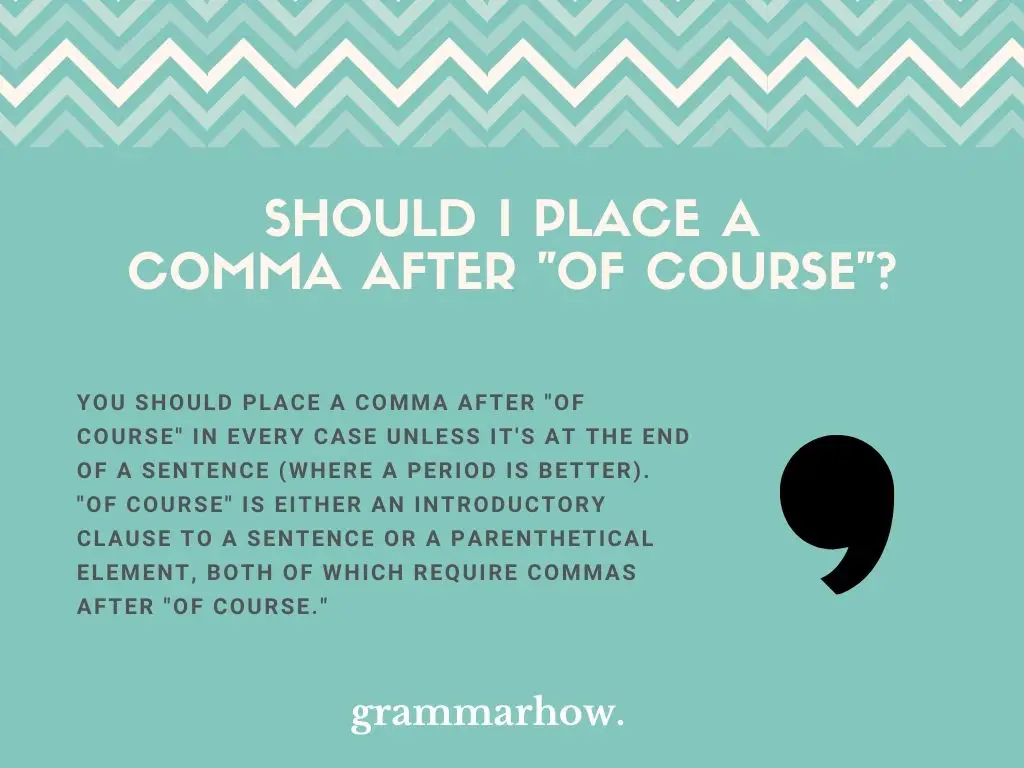
"Of Course" Easy Comma Guide + Examples (All Variations)

Of Course You Do For Sure GIF Of Course You Do For Sure You Are Right

Adam Silvera Quote “Of course you did,” I say. “They don’t make them

Antoine de SaintExupéry Quote “Of course I’ll hurt you. Of course you

Of Course You Can 11 x 17" Vinyl Wall Art Decal by Scripture Wall Art

英語で「もちろん」は「Of course」? ネイティブがイメージする「Of course」と様々な言い換えを学ぼう! ネイティブキャンプ

of course you do I knew you would Willy Wonka Sarcasm Meme Meme Generator
![Of course you can’t do that [SLIDE] mcleod](http://dangerouslyirrelevant.org/wp-content/uploads/2012/01/OfCourse.png)
Of course you can’t do that [SLIDE] mcleod
This Article Will Dive Deep Into The Nuances Of “Of Course” Or “Ofcourse,”.
A Tropical Climate Is, Of Course, Very Humid, So We Sweated All The Time.
See Examples, Synonyms, And Translations In Different Languages.
'Can I Just Say Something About The Cup Game On Saturday?'—'Yes Of Course You Can.' 'Could.
Related Post: